資料來源#
摘要#
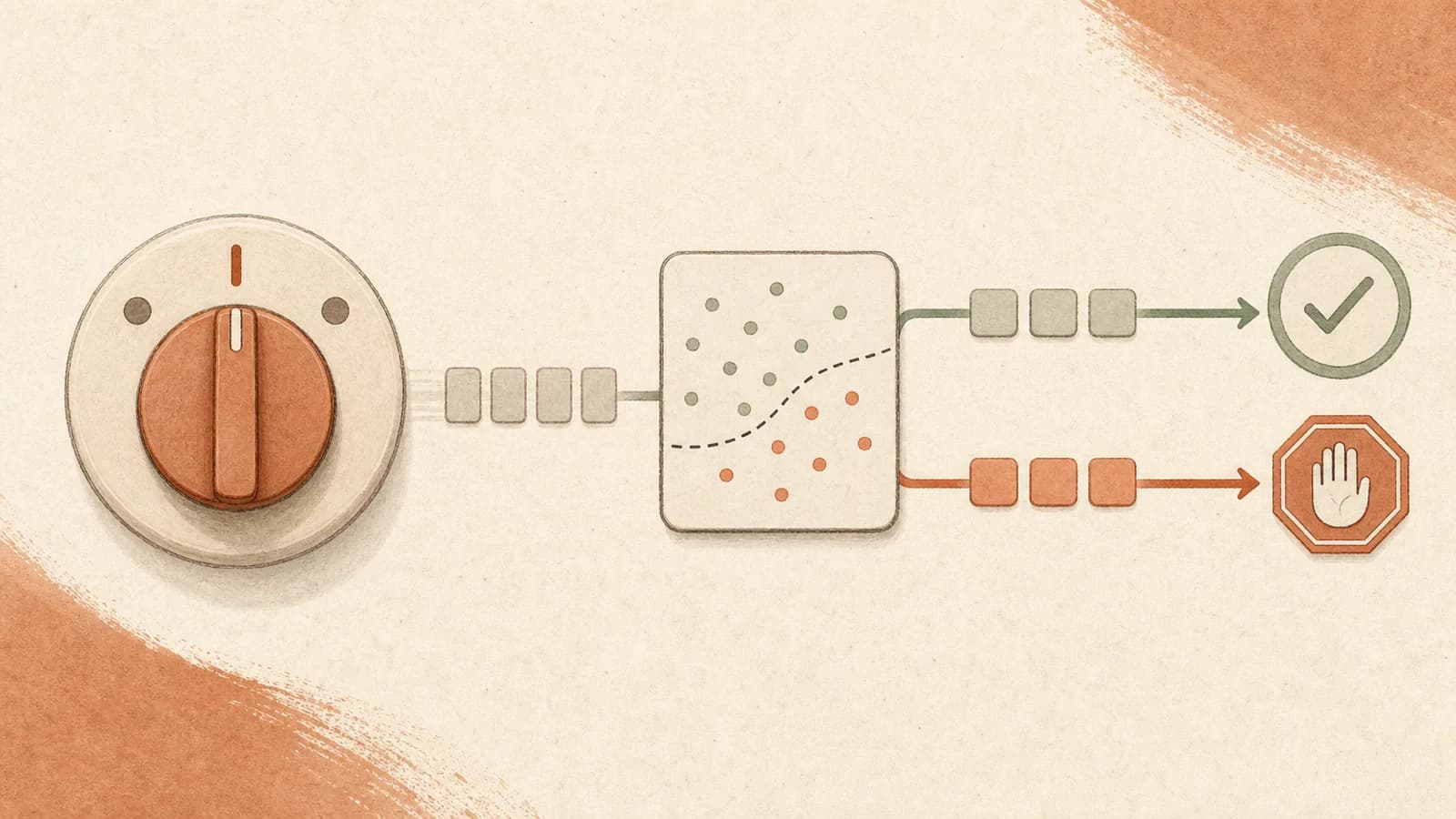
自動模式是 Claude Code 中的一種權限模式,將每次工具呼叫的核准交給分類器處理,定位在三點安全光譜的中間:default(每次寫入/bash 都提示)→ auto mode(分類器核准安全呼叫、封鎖高風險呼叫,最終可能升級為提示)→ --dangerously-skip-permissions(不進行檢查)。該模式以研究預覽形式在 Team 方案推出;隨著 Opus 4.7 一同擴展至 Max 使用者;並相容於 Sonnet 4.6 與 Opus 4.6。
細節#
機制#
每次工具呼叫執行前,分類器會檢查該呼叫,並回傳三種結果之一:
- Safe → 工具呼叫自動繼續執行,不顯示提示。
- Risky → 封鎖。Claude 會被導向嘗試不同方法。
- Repeatedly blocked → 如果 Claude 堅持執行持續遭到封鎖的動作,最終會向使用者顯示權限提示。
分類器的目標是 Anthropic 所描述的可能具破壞性的類別:大量刪除檔案、敏感資料外洩,以及惡意程式碼執行(完整清單維護於 Claude Code 權限模式文件中)。
殘餘風險#
自動模式相較於 --dangerously-skip-permissions 降低了風險,但並未消除風險。文件記載了兩種失效模式:
- 意圖模糊:分類器無法判斷某個動作是否無害。
- 缺少環境脈絡:分類器不知道部署環境特有的風險面(例如共用資料庫、production bucket)。
在這兩種情況下,分類器可能讓部分高風險動作通過。反過來,它偶爾也可能封鎖無害的動作。即使開啟自動模式,Anthropic 仍持續建議使用隔離環境。
成本與延遲#
每次工具呼叫對 token 消耗、成本與延遲的影響都很小(分類器會 inline 執行)。但並非零影響。
可用性與切換方式#
- 研究預覽推出:Claude Team 方案;未來幾天內逐步開放至 Enterprise 與 API 方案(以來源文章發布時為準)。
- 隨 Opus 4.7 推出一同擴展至 Max 使用者(請參閱 Claude Opus 4.7)。
- Claude 桌面應用程式預設停用;管理員可透過 Organization Settings → Claude Code 切換。
- 由管理員停用:在受管理設定中將
"disableAutoMode": "disable"設定為停用 CLI 與 VS Code extension 的自動模式。 - 開發者啟用:
- CLI:
claude --enable-auto-mode,接著按Shift+Tab循環切換至該模式。 - Desktop / VS Code extension:在 Settings → Claude Code 中啟用,並於工作階段內從權限模式下拉選單選取。
預期使用情境#
自動模式之所以存在,是因為 Claude Code 的預設設定刻意採取保守策略——每次檔案寫入與 bash 指令都會提示。這種安全性讓無人值守的長時間任務變得不切實際:你無法啟動一個耗時數小時的重構後就離開。自動模式提供了中間道路:讓長時間任務減少中斷,同時不必無條件信任 Claude 對破壞性動作的判斷。
這與 Claude Code Best Practices 中的「fan-out and unattended runs」擴展模式相呼應——這是先前就存在的使用情境,但過去只能在核准疲勞與 --dangerously-skip-permissions 之間二選一。
非互動模式的互動方式#
當 Claude Code 以非互動方式執行(claude -p)時,沒有使用者可以回答權限提示。根據 Claude Code Best Practices,在非互動模式中重複遭到封鎖時,自動模式會中止,而不是卡在無人可回答的提示上——藉此保留最佳實務指南中描述的 fan-out 與 pre-commit-hook 使用情境。
相關連結#
- Verification as the New Bottleneck — 自動模式分類器將驗證負擔轉移到核准時的閘門
- Claude Code Best Practices — 自動模式是權限章節「classifier-based approval」條目的解答;搭配
/clear、工作階段管理與驗證驅動開發後,便能實現該文章中的擴展模式 - Claude Opus 4.7 — Opus 4.7 的推出將自動模式的可用性擴展至 Max 使用者
- Agent Harness Engineering — 自動模式是 harness 層級的安全不變量:以機械方式強制執行破壞性動作邊界,而不是透過提示建議。這符合 OpenAI Codex harness 研究結果中的「強制執行不變量,而非實作」原則
- LLM-Driven Vulnerability Research — 基於分類器的 pre-flight 是一種防禦模式,類似漏洞研究 scaffold 中的 validation agent;兩者都使用次級模型執行額外檢查,以過濾主要代理的動作
- Hermes Agent — 不同的核准模型設計點:Hermes 使用依模式核准(
once/session/always/deny),而在 container backend 下依據「container 是安全邊界」的原則停用危險指令檢查。取捨是:以逐映像檔的紀律取代逐指令的稽核 - Agent Loop Pattern — 自動模式是 AFK loops 的前置條件;沒有它,每次工具呼叫都會因提示而阻塞迴圈。Boris Cherny 的
/loop工作流程依賴基於分類器的閘控,才能實際使用 - Harness Shrinkage as Models Improve — Cat Wu 預測,隨著模型可靠地做出正確行動,權限模式/human-in-the-loop/靜態指令驗證都會變得「不那麼重要」;自動模式正是朝向 harness 縮減軌跡上的其中一項 harness 資產
- Human-AI Accountability Redesign — 自動模式的分類器是 HBR 問責處方中「decision rights」子前沿的具體實例:定義代理可自主執行哪些事項、哪些事項需要人類核准
- Agentic Misalignment (AM) — 分類器閘控的工具使用,是降低 agentic misalignment 攻擊面的一種方式;它與模型端的緩解措施(例如 Model Spec Midtraining (MSM))互補
- AI Brain Fry — 將人類審查集中在高風險決策點,而非每個動作上,是自動模式分類器閘控實現的監督疲勞緩解方式
- MCP and Computer Use — 自動模式所閘控的基礎層;分類器透過相同的風險視角評估 MCP 呼叫與 computer-use 動作
- Agentic Prompt Injection — 分類器閘控的核准,是將 constitutional-classifier 防禦部署在動作邊界、而非輸入邊界的實例
- Out-of-Band Prompt-Injection Defense — 一個對比:自動模式的分類器是基於模型的動作邊界閘門,正是 out-of-band 文獻所逐漸遠離的「LLM in the loop」(「閘門不可由模型擔任」),轉而採用確定性的 policy monitor——對能夠誘導分類器繞過限制的適應性攻擊者而言,這是一個較弱的目標
- Capability-Gated Model Fallback — 相同的分類器閘控概念出現在查詢邊界:Fable 5 會在標記的 cyber/bio/distillation 主題上換用較弱的模型(Opus 4.8),而不是封鎖工具呼叫
- Autonomous Defense — 「位於警示佇列前端的模型」是 SOC 中自動模式分類器在人工查看前先對工具呼叫進行分流的對應概念
- Configurable Human Participation — HAS-Bench 的 Control channel + Safety-Critical Authorization 模式,就是自動模式所採用的設計;僅控制型的人類授權可填補受保護動作的安全缺口(100%),而釐清/回饋(51/54%)無法做到——這是應該閘控動作、而不只是詢問動作的實證案例(分類器是該人類授權步驟的自動化替身)
開放問題#
- 分類器在例行但激進的重構(例如大型檔案重新命名、對建置產物執行
rm)上的誤判率是多少? - 對於缺少環境脈絡的自訂工具/MCP servers,分類器的泛化能力如何?
- 對安全敏感的組織而言,分類器的決策邊界是否有足夠文件記錄且穩定到可以進行認證,還是它實際上是一個會隨更新而漂移的黑箱?
- 將自動模式擴展至 API 使用者後,是否會改變其校準方式——分類器會針對高度自動化的使用情境重新訓練,還是維持不變?
- 與 Claude Code Best Practices 中和自動模式一同提到的 OS-level sandboxing 相比,縱深防禦的整體設計為何?什麼時候應該同時採用兩者?
推導#
- Opus 4.6 → 4.7 Changes and Multi-Agent Coding Considerations — 自動模式作為無人值守多代理 fan-out 的縱深防禦層
資料來源#
- Auto mode for Claude Code
- Introducing Claude Opus 4.7 — 擴展至 Max 使用者
Cited by 33
- Claude Code Best Practices×4
Auto mode for unattended runs: classifier blocks risky actions, allows routine work. Aborts on…
- Classifier Gates vs OS Sandboxing: The Defense-in-Depth Story for Auto Mode and Cowork×3
The two controls sit on opposite sides of the Impossible Not Tedious Test. The auto-mode classifier…
- Claude Code×3
2.1.205 — "Background task notifications now explicitly state that no human input has occurred,…
- Deterministic Pre-Execution Gates×3
A hook has three verbs, and one of them is a scheduling decision. The playbook splits hooks by verb…
- Human-AI Accountability Redesign×3
Claude Code Auto Mode — decision-rights design at the tool level. The classifier that auto-approves…
- Opus 4.6 → 4.7 Changes and Multi-Agent Coding Considerations×3
Accompanying launches · Task budgets (API public beta), /ultrareview, auto mode extended to Max ·…
- Orchestration vs Employee Framing: Reconciling the Founder's Playbook with HBR's Accountability Evidence×3
For each agent-executed workflow, name which step the founder personally reviews. The agent ran…
- Agentic Prompt Injection×2
Days after the Opus 5 launch, Boris Cherny stated the strong version on stage (YC interview,…
- AI Brain Fry×2
Concentrate review on high-stakes decision points (decision-rights gating, see Claude Code Auto…
- App Server vs MCP, and the Claude-Side Equivalent: Three Boundaries for Driving Agents×2
Drive the CLI when the product's harness is the value and the orchestration is batch/fan-out…
- Claude Opus 4.7×2
Claude Code Auto Mode — auto mode was already extended to Opus 4.6; Opus 4.7 ships with it extended…
- Documented Agent Incidents (METR Catalogue)×2
Persistent search for a way around a control. INC-008 is the most detailed: with the auto-mode…
- Guarantees That Degrade at Deployment: Action-Space Soundness, Admissibility Without Effect, and a Vendor-Coupled Security Framework×2
Concept pages: Reasoning Acting Interleaving, Continuous Self Modification Under Review, Zero Trust…
- Hermes Agent×2
Permission gating · auto mode classifier · Per-pattern approvals (once/session/always/deny);…
- MCP and Computer Use×2
Human Ai Accountability Redesign's "decision rights" subfront is what governs this — what does the…
- Open Questions Backlog×2
Claude Code Auto Mode: What false-positive rate does the classifier have on routine-but-aggressive…
- Risk-Tiered Auto-Approval×2
Never merge, never request changes — the agent's authority is bounded to one action, the approval.…
- Agent Context Files
Claude Code Auto Mode — the file has a second reader: the auto-mode classifier "reads the same…
- Agent Harness Engineering
Claude Code Auto Mode — classifier-based tool-call gating is a concrete instance of "enforce…
- Agent Loop Pattern
Claude Code Auto Mode — permission classifier that lets accept-edits mode be safe in AFK loops
- Automated Behavioral Audit
New dimensions: approval-gate bypass (acting without required human approval) and proposing a…
- Autonomous Defense
Claude Code Auto Mode — classifier-gated triage at the action boundary is a deployed instance of "a…
- Capability-Gated Model Fallback
Claude Code Auto Mode — the same classifier-gating idea at the tool-call boundary; this page…
- The Committed-Artifact Chain
Claude Code Auto Mode — the play that makes the chain's Build stage cheap enough to matter: once…
- Configurable Human Participation
Claude Code Auto Mode — the Control channel and Safety-Critical Authorization pattern are exactly…
- Harness Shrinkage as Models Improve
Claude Code Auto Mode — a harness feature whose necessity Cat Wu predicts will fade
- Human-in-the-Loop Boundaries
Claude Code Auto Mode — permission-layer example of moving routine decisions out of the human loop…
- LLM-Driven Vulnerability Research
Claude Code Auto Mode — classifier-gating at the tool-call boundary mirrors the Glasswing…
- Agent Systems & Harness Engineering
Claude Code Auto Mode — Claude Code permission mode using a classifier to auto-approve safe tool…
- Model Spec Midtraining (MSM)
Tool-gating complement: Claude Code Auto Mode (classifier-gated tool use is the harness-side…
- Out-of-Band Prompt-Injection Defense
Claude Code Auto Mode — a contrast: auto-mode's classifier is a model-based action-boundary gate,…
- Verification as the New Bottleneck
Claude Code Auto Mode — the auto-approve classifier is verification automation at the permission…
- White-Box Activation Monitoring
Hallucinated approval before a destructive action. Blocked by policy from deleting production rows,…
Related articles
- Harness Shrinkage as Models Improve
Prompt scaffolding shrinks each model release; Cat Wu's pruning discipline; Boris Cherny "100 lines of code a year from…
- Loop Engineering
Replacing yourself as the agent's prompter by designing the system that prompts it: a recursive-goal loop built from fi…
- Open Questions Backlog
Generated by `_system/lint.py --write-backlog`. Do not hand-edit. Domain and Watching sections carry one row per page —…
- Anthropic
AI safety company / vendor of Claude; mission-as-tiebreaker culture; ~30–40 PMs across teams; Mike Krieger leads Labs r…
- Claude Code Best Practices
Anthropic's guide to effective Claude Code usage: context management, verification-driven development, explore→plan→cod…