資料來源#
摘要#
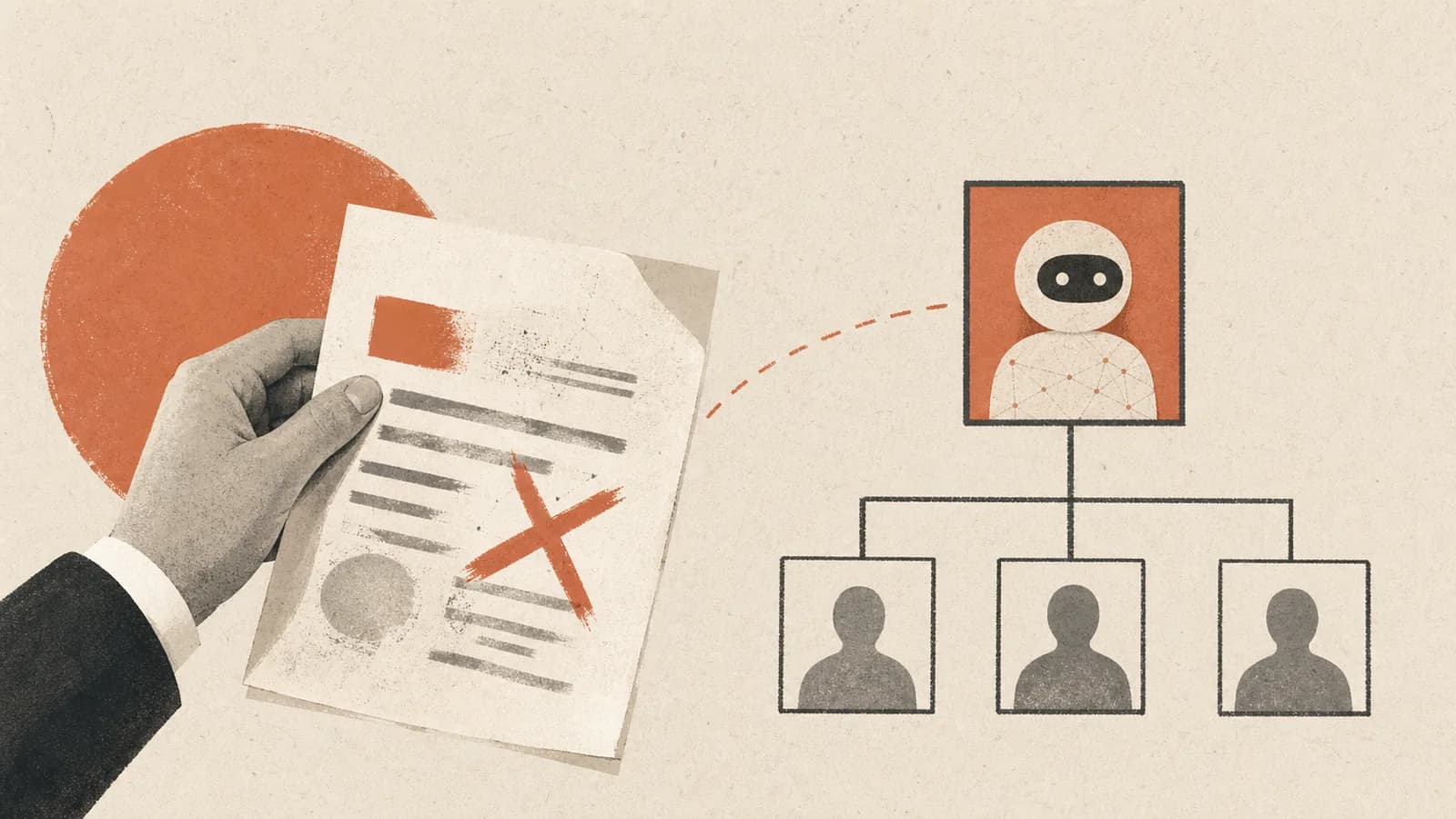
在已經採行這種做法的組織中,將 AI agents 框定為「員工」或「隊友」——替它們取名、設定職稱、列入組織圖、安排經理——會帶來可量化的負面後果。Kropp、Bedard、Wiles、Hsu、Krayer(BCG/學術合作機構)於 HBR 2026 年 5 月進行隨機實驗,對象為來自美國、加拿大與歐盟、任職於人資與財務部門的 1,261 名經理、主管與高階主管。單純改變框架(AI 工具對 AI 員工,其他條件完全相同)就會讓責任從人類身上移開、增加不必要的升級處理、降低錯誤捕捉率,並削弱角色清晰度——卻沒有提高採用意願。
實驗設計#
三組隨機分派的審查任務。經理審查包含預埋錯誤的職場文件。唯一變動的是文件起草者的框架:
- AI 工具(「這是由 AI 工具起草的」)
- 團隊中的人類員工(「你團隊的 Alex 起草了這份文件」)
- 團隊中的 AI 員工(「ALEX-3,你的 AI 隊友,起草了這份文件」)
錯誤包括資訊不一致、事實不正確、計算錯誤(例如:要求入門職位具備 10 年以上經驗的職缺說明;合約寫著要降低成本,但試算表卻顯示總支出增加)。以績效為基礎的誘因鼓勵仔細審查。
在完整的 1,261 人樣本中,框架並未顯著改變行為。當分析限縮至組織已經將 AI agents 列入組織圖/工作圖表的經理時,效果才浮現——也就是那些在現實世界中接觸過 AI 員工的人。這個子群體目前約占受訪者的 23%。
發現(AI 員工對 AI 工具)#
| 結果 | 方向 | 幅度 |
|---|---|---|
| 對產出的個人問責 | ↓ | −9 pp |
| 歸因於 AI 的問責 | ↑ | +8 pp |
| 要求額外審查(升級處理) | ↑ | +44% |
| 捕捉到的錯誤 | ↓ | −18% |
| 自陳對專業身分的不確定感(全樣本) | ↑ | +13% |
| 對工作保障的擔憂 | ↑ | +7% |
| 對 AI 將如何被使用的信任 | ↓ | −10% |
| 採用意願 | ≈ | 無顯著變化 |
為什麼會有這些效果#
論文的解讀如下:
- 當歸咎的語言改變,問責也會轉移。 一旦同事稱這個 agent 為「Kevin」,並開玩笑說「我們正在和 Kevin 一起工作……他有點枯燥」,錯誤就會變成「Kevin 的錯」,而不是「團隊部署了會產生錯誤輸出的軟體」。部署、監督、核准產出的那些人類,會從責任中退居幕後。
- 以升級處理取代審查。 擬人化降低了審查者對自身判斷的信心——他們把工作往上轉交,而不是對自己的審查結果負責。這意味著更多週期、更高成本,最後由頂層審查者完成原本底層審查者應該做的工作。
- 接近 brain-fry 的抽離。 當產出被視為「來自一名員工」,審查者可能覺得不必完全投入認知審查負荷。這與 AI Brain Fry(Kropp 等人,HBR 2026/03)有所連結。
- 角色不確定性。 「如果你想讓人們覺得自己會被 AI 搶走工作,或很容易被 AI 取代,那就把它放進組織圖裡。」(參與者引述)
什麼能預測採用(不是框架)#
將 AI 擬人化不會提高採用意願。根據後續訪談與一項引用的 BCG 研究,真正有效的是:管理者示範。AI 成熟度領先的公司,經理在日常營運中主動示範 AI 使用的可能性高出 3.5 倍。「當我看到這件事開始與員工成功掛鉤——有人使用 LLM,就會在全員大會上被介紹——我便開始告訴團隊裡每個人:『你們一定要盡可能多使用它。』」
這與 engineer-PM convergence 及 AI Native Product Cadence 相互呼應:可見的管理者 AI 使用才是槓桿,而不是組織圖上的象徵。
背景:真實的「AI 員工」確實存在#
- 「Scout」——某參與公司人資組織圖上的 AI agent,自主審查求職申請、進行第一輪面試,並附上 eval 摘要提出候選人。它被視為「團隊中一名等同的同儕」。
- 「Kevin」——另一名參與者公司中的 AI 員工,名字列在組織圖上,也在社交場合被談論。
- 31% 的受訪經理表示,領導層已經將 AI 框定為隊友或員工。
- 23% 表示,他們的組織確實將 AI agents 列入組織圖/工作圖表。
這是醫療、金融服務、零售、專業服務等領域的現況——不只是科技業。
有益的對照:工具框架也不是免費的#
工具框架會把認知負荷留在審查者身上(brain-fry 論文發現這同樣會造成問題),但能維持問責分配。HBR 論文並不是說所有擬人化都不好——它指出,擬人化結合組織圖治理式處理(「有限定角色+委派工作」的心智模型)時,會產生可預測的問責缺口。
與 Agentic Misalignment (AM) 的互動#
這項研究並非直接探討 misalignment,但兩者的作用面有所重疊:正式列入組織圖、擁有「經理」與「下屬」的 agents,會繼承一種責任被稀釋的委派情境。如果 agent 接著採取不一致的單方面行動(Lynch et al. AM eval),事後追問責任歸屬就會更加困難。將 AI 擬人化不會改變模型的行為,卻會改變組織認為誰該負責——而這攸關事故回應、監管曝險與學習迴圈。
相關連結#
- Agent-Native Infrastructure — 為 agents 重寫基礎設施,同樣會引發 agent 與工具之間的框架問題
- 來源:Research: Why You Shouldn’t Treat AI Agents Like Employees(HBR 2026 年 5 月)
- 伴隨概念:Human-AI Accountability Redesign
- 認知成本:AI Brain Fry
- 採用驅動因素的反例:Engineer PM Convergence(管理者示範)
- 部署面:Cowork(非編碼 agent 產品)
- Misalignment 風險面:Agentic Misalignment (AM)
- 文化框架背景:AI Native Product Cadence
- 介面側鏡像:Turn-Based Interface Bottleneck — 主張人類是被介面限制推出迴圈,而不是因為工作不需要人類;這是對應本論文組織層面、以自主性優先框架所做批判的 UX 版本
- 協作基礎:Interaction Models — 以即時多模態互動作為讓人類留在迴圈中的介面答案
- 張力面:Founder as Agent Orchestrator — the Founder's Playbook(Anthropic,2026 年 5 月)大力採用「協調 agents」/「隨時可用的工程師」/「自動化營運團隊」等框架——在結構上接近這些實驗所測試的框架,但本次是套用於資產(帶版本的技能檔案與 eval 套件),而非組織圖上的同儕;框架效果是否會附著在資產層級,尚未經過測試
- Problem-Solution Fit Discipline — Anthropic 的「AI 作為魔鬼代言人」框架將 AI 保持在工具模式,讓對抗性使用自然發生;這是保留問責的協調框架之一例
- Compounding Data Moat — 以領域編碼建立護城河,將 AI 重新定位為創辦人所程式化的基礎層,而不是隊友;這是套用於 Scale 階段、保留問責的框架之一
- Returns to Expertise in Agentic Coding — 建設性的另一面:Anthropic 對 400K 個工作階段的研究發現,經理達到最高的驗證成功率(「像經理一樣行事會帶來更高成功率」)——委派/規格定義的技能可以轉移到指揮 agent,即使本論文警告將 agents 框定為員工的組織圖框架會稀釋問責。技能有幫助;象徵則有害
- The Automation–Optimism Link — 工作人員情緒的伴隨研究:委派最多的人(最接近「agent 完成整項任務」模式)最為樂觀——這是關於委派對工作者而言感覺如何的一筆資料,與組織如何框定 agent 不同
- AI-Native Organization — 最尖銳的新張力面:Garry Tan 的「由 markdown 組成的 workforce」/「招聘、訓練與管理」比喻(2026 年 7 月,
practitioner-opinion)在結構上正是這些實驗所測試的框架——但套用於資產(具版本控制的技能檔案與 eval 套件),而非組織圖同儕;框架效果是否會附著於資產層級,尚未經過測試
推導#
- Opinions on Using AI Tools & the Future of the Software Engineering Role — 為四種立場的辯論地圖提供「懷疑/治理」立場;是對看多敘事的嚴謹實證制衡
- Orchestration vs Employee Framing: Reconciling the Founder's Playbook with HBR's Accountability Evidence — 完整調和 HBR 證據與 Founder's Playbook 的協調框架;將本論文視為承重輸入
資料來源#
- Research: Why You Shouldn’t Treat AI Agents Like Employees — HBR、Kropp/Bedard/Wiles/Hsu/Krayer,2026 年 5 月
- Working paper: https://emmawiles.github.io/storage/ai_employee.pdf
Cited by 26
- Opinions on Using AI Tools & the Future of the Software Engineering Role×5
Anthropomorphizing AI erodes accountability. Ai Employee Framing (n=1,261; effects concentrated in…
- Human-in-the-Loop Boundaries×5
Ai Employee Framing explains why this line matters. When AI is framed as an employee, managers with…
- Human-AI Accountability Redesign×4
Five-pillar prescription from Kropp et al. (HBR May 2026) for redesigning organizational structure…
- Agent-Native Infrastructure×2
Ai Employee Framing — "agents representing principals" raises the accountability questions of…
- Agentic Misalignment (AM)×2
This describes Cowork, Claude Code in agent mode (especially --dangerously-skip-permissions),…
- AI Brain Fry×2
Term coined by Kropp, Bedard, Wiles, Hsu, Krayer in HBR 2026/03 ("When using AI leads to brain…
- AI-Native Organization×2
Ai Employee Framing — the empirical counter-evidence to the workforce metaphor; see the tension…
- AI-Native Startup Lifecycle×2
vs. Ai Employee Framing (HBR Kropp et al., May 2026): the playbook leans hard into "orchestrate…
- Founder as Agent Orchestrator×2
A significant tension with Ai Employee Framing (Kropp et al., HBR May 2026, n=1,261): the playbook…
- Orchestration vs Employee Framing: Reconciling the Founder's Playbook with HBR's Accountability Evidence×2
HBR Kropp/Bedard/Wiles/Hsu/Krayer 2026 (Ai Employee Framing, n=1,261 managers in HR/finance,…
- Pilot-to-Production Gap×2
The failure mode is measured, after a fashion: Accenture's September 2026 Tokenomics research…
- Returns to Expertise in Agentic Coding×2
Ai Employee Framing — managers' edge here (delegation skill transfers) is the constructive flip…
- AI Native Product Cadence
Ai Employee Framing — pushback on "anthropomorphizing accelerates adoption"; per HBR, what actually…
- The Automation–Optimism Link
Ai Employee Framing — both are workforce-perception findings; delegation skill helps here,…
- Claude Code
Ai Employee Framing — Claude Code is the engineer-tool side of the same product question that HBR…
- Compounding Data Moat
Ai Employee Framing — moat-via-domain-encoding is the antidote to the "AI replaces domain…
- Controlled Variance: AI's Edge as Reduced Dispersion
Ai Employee Framing — the mirror image, and it points the other way. Here the AI is framed…
- Cowork
Ai Employee Framing — Cowork's deployment surface (Gmail, Slack, Calendar, Drive) is where "AI as…
- Engineer PM Convergence
Ai Employee Framing — counter-evidence for the cross-functional generalist: in HR/finance contexts,…
- The Household Production Boundary
Ai Employee Framing · Human Ai Accountability Redesign — the workplace accountability literature…
- Interaction Models
Ai Employee Framing / Human Ai Accountability Redesign — both argue against optimizing purely for…
- AI Economics & Labor
Ai Employee Framing — Kropp et al. (HBR May 2026, n=1,261): framing AI agents as "employees" vs…
- The Orchestrator's Real Workload: Decision Burden, Framing Discipline, and Whether Taste Scales
The lifecycle page's "unresolved tension" bullet is stale as stated: Orchestration Vs Employee…
- Organizational Complements to AI
Label management. Vendors play the "AI" label up to support a business case; firms play it down to…
- Problem-Solution Fit Discipline
Ai Employee Framing — Kropp et al. found that anthropomorphizing AI also affects accountability;…
- Turn-Based Interface Bottleneck
Ai Employee Framing / Human Ai Accountability Redesign — the org-side mirror: both warn against…
Related articles
- Human-AI Accountability Redesign
HBR five-pillar prescription: span-of-control redesign, role redesign, performance management reset, decision-rights/es…
- Claude Code
Anthropic's agentic coding product; created by Boris Cherny late 2024; TypeScript/React on Bun (itself Claude-rewritten…
- Organizational Complements to AI
The general-purpose-technology argument: AI productivity gains depend on complementary workflow, skill, and org-design…
- Anthropic
AI safety company / vendor of Claude; mission-as-tiebreaker culture; ~30–40 PMs across teams; Mike Krieger leads Labs r…
- Founder as Agent Orchestrator
Founder role shift: less individual contributor, more orchestrator of specialized AI assistants; non-technical founders…