資料來源#
摘要#
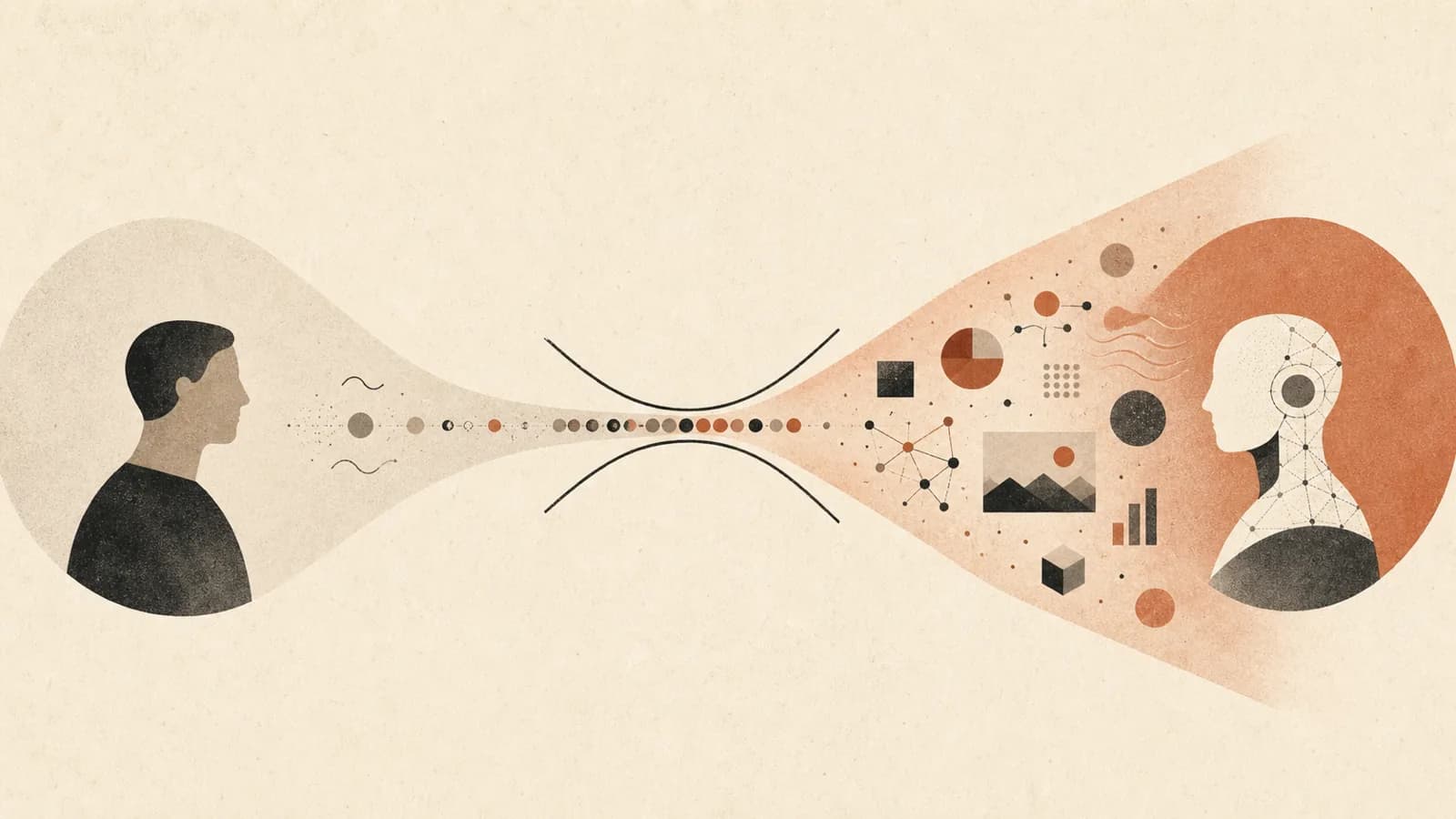
Thinking Machines Lab 闡述了目前 AI 介面限制協作的原因:回合制介面是人類與模型之間的頻寬瓶頸。這正是 Interaction Models 致力於消融的問題。
兩項主張#
-
AI 實驗室過度追求自主性。 實驗室將自主能力視為模型最重要的特性;因此,今天的模型與介面「並未針對讓人類持續參與其中而最佳化」。但在大多數真實工作中,使用者無法事先完整說明需求後就離開——良好的結果來自釐清與回饋的協作迴圈。
-
人類是被介面而非工作排除在外。 「人類越來越被排除在外,不是因為工作不需要他們,而是因為介面沒有為他們留下空間。」解決方式是讓人們以與他人協作相同的方式與 AI 協作:傳訊息、交談、聆聽、觀看、展示、插話——模型也做同樣的事。
機制:單一執行緒#
今天的模型「在單一執行緒中體驗現實」:
- 在使用者完成輸入/說話之前,模型會等待,對使用者正在做的事情以及做事方式沒有任何感知。
- 在模型完成生成之前,它的感知會凍結——除非模型完成或遭到中斷,否則不會有新資訊進入。
這個狹窄的通道限制了人的知識、意圖與判斷有多少能傳達給模型,也限制了模型的工作有多少能被人類理解。可以類比為:「試圖透過電子郵件解決一項關鍵分歧,而不是當面處理。」
為什麼 harness 無法解決問題#
現有的即時系統透過 harness 加裝互動性——VAD(語音活動偵測)、回合邊界預測、對話狀態機——這些元件「在實質上都比模型本身不智慧」。這個 harness 預先排除了完整的互動模式:
- 主動插話(「我說錯時打斷我」)
- 對視覺線索做出反應(「我在程式碼中寫出錯誤時告訴我」)
- 邊聽邊說(「即時將西班牙語→英語翻譯」)
- 邊看邊說(「為這場體育賽事進行即時評述」)
The Bitter Lesson 指出,這些手工打造的系統會被通用能力的成長速度超越 → 解決方案是讓互動性成為模型原生能力(參見 Time-Aligned Micro-Turns)。
相關連結#
- 互動模型 — 所提出的解決方案
- The Bitter Lesson — 為什麼以 harness 為基礎的現狀會落敗
- 時間對齊的微回合 — 移除回合邊界的架構轉向
- 全雙工互動 — 目前被瓶頸阻擋的互動模式
- 隨模型改進而縮減 harness — 「較不智慧的 harness 應當消融並融入模型」的通用版本
- AI 員工框架 / 人類—AI 問責重設計 — 組織層面的鏡像:兩者都警告不要把自主性視為目標,也不要把人類推向邊緣;本頁則是同一批判的介面版本
- 設計概念拷問 — 主張價值在於協作迭代;本頁主張阻礙這件事的是介面
- 上下文視窗智慧區 — 同樣會讓「完全自主、離開不管」變得脆弱的正交限制
- 可設定的人類參與 — HAS-Framework 的具型人類/代理發起通道,正是「為人類留下空間」的介面應該路由的內容;代理發起釐清品質的測量變異(以及代理是否會提出問題)就是將此瓶頸作為結果評分
資料來源#
Cited by 14
- Interaction Models×3
Today's models "experience reality in a single thread": they wait, blind, until the user finishes…
- GPT-Live×2
GPT-Live — full-duplex; the detector is gone; turn-taking is model behavior. The dissolution Turn…
- Live-Path Minimalism×2
Turn Based Interface Bottleneck — the harness this dissolves from the audio path, and the place…
- The Bitter Lesson×2
Interaction Models — TML cites "the bitter lesson" directly: hand-crafted interactivity systems…
- Thinking Machines Lab×2
Stakes out a different priority than the labs critiqued in Turn Based Interface Bottleneck ("AI…
- Time-Aligned Micro-Turns×2
Contrast: turn-based models see an alternating token sequence with hard turn boundaries; real-time…
- AI Employee Framing
Interface-side mirror: Turn Based Interface Bottleneck — argues humans get pushed out of the loop…
- Opinions on Using AI Tools & the Future of the Software Engineering Role
Interface, not just code. Interaction Models / Turn Based Interface Bottleneck: today's turn-taking…
- Configurable Human Participation
Turn Based Interface Bottleneck — HAS-Framework's typed edges and agent/human-initiated channels…
- Design Concept Grilling
Interaction Models — grilling is collaborative real-time iteration; turn-based interfaces are…
- Full-Duplex Interaction
Turn Based Interface Bottleneck — the half-duplex status quo this replaces
- The Future of Agent Interfaces
Human collaboration · Interaction Models / Full Duplex Interaction · Human senses, speech, screen,…
- Human-AI Accountability Redesign
Interface-side mirror: Turn Based Interface Bottleneck — the interface-level version of the same…
- Interaction & Multimodal
Turn Based Interface Bottleneck — Why current AI interfaces limit collaboration: single-thread…
Related articles
- Interaction Models
Thinking Machines Lab (May 2026): models that handle audio/video/text interaction natively in real time instead of via…
- Interaction / Background Model Split
Dual-model architecture: time-aware interaction model stays present; async background model handles deep reasoning/tool…
- Agent Harness Engineering
Patterns for scaffolding long-running LLM agents: environment design, progressive context disclosure, mechanical archit…
- Full-Duplex Interaction
Perceive-and-respond simultaneously across modalities; proactive interjection, visual-cue reactions, simultaneous speec…
- Encoder-Free Early Fusion
Multimodal design with minimal pre-processing instead of large standalone encoders: TML co-trains dMel audio + 40×40-pa…