資料來源#
- Anthropic's Boris Cherny: Why Coding Is Solved, and What Comes Next
- Designing with Claude: From prompt to production
- How Anthropic's product team moves faster than anyone else | Cat Wu (Head of Product, Claude Code)
摘要#
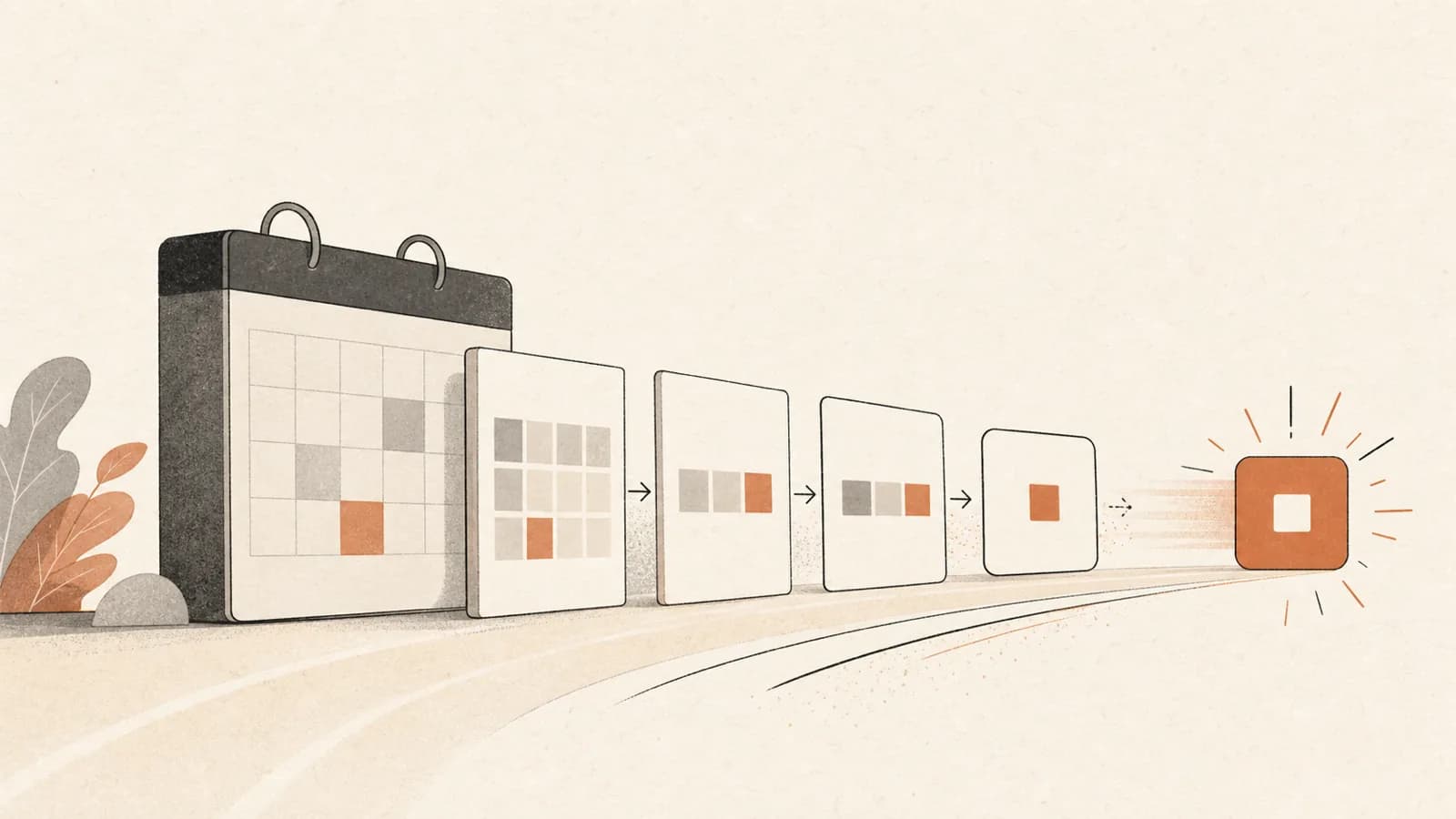
Cat Wu 描述了 Anthropic 如何以令觀察者驚訝的速度發布產品。每項產品功能的週期時間,從 6 個月 → 1 個月 → 有時只要 1 天。其中的機制主要是移除流程,而不是增加流程:以研究預覽作為品牌定位來降低承諾,以使命作為決勝依據來消除跨團隊協商,透過常設發布室在同一天完成文件與行銷,對模糊功能不寫 PRD,以及把具備產品品味的工程師作為交付單位(見 Engineer PM Convergence)。
「快速」實際上是什麼樣子#
- 團隊成員週一提出想法 → 週末前以研究預覽形式上線。
- 來源:Lenny:「有人做了一份 Anthropic 發布項目的日曆,而它真的幾乎每天都有一項重大功能或產品。」
- 個別功能的時程「有時」只要 1 天,不是大多數功能都如此——但大多數功能需要 1 個月,而業界慣例是 1 季。
什麼因素不是原因#
有人直接問 Cat:團隊內部可以使用 Mythos,是否解釋了這樣的速度?
「不完全是 Mythos。我們確實會在內部使用這些模型,我認為這讓我們的發布速度稍微加快了一些,但我不認為這能解釋大部分的增幅。我認為其中很大一部分來自流程,以及團隊承受的期待。」
請認真看待這一點:瓶頸不是模型,而是流程。
構成這套節奏的六項實踐#
1. 研究預覽品牌#
大多數發布都會以「研究預覽」形式推出,並明確標示這個品牌定位。這會:
- 讓使用者預期功能尚處早期階段,未來可能改變
- 降低內部承諾——團隊不必承諾永遠支援它
- 允許在尚未完整時發布——一週內把想法交到使用者面前,再依據回饋迭代
2. 以使命作為決勝依據#
「如果有兩個互相競爭的優先事項,我們會討論哪一個對 Anthropic 的使命更重要。」
這移除了最昂貴的協調成本:團隊之間對優先順序的爭論。使命(「為人類打造安全的 AGI」)高於任何單一產品。當團隊發生衝突時,由使命做決定——而且「每個人都會支持我們所做的決定」。
這是透過共享價值來移除流程,而不是透過會議來增加流程。
3. 常設發布室#
「工程師會把[完成的功能]發布到我們的常設發布室。負責文件的 Sarah、負責 PMM 的 Alex,以及 Devril 的 Tar 和 Lydia 都會直接加入,並在隔天就完成行銷公告。」
這是一個常設頻道,完成的功能能在同一天獲得文件與行銷支援。它消除了工程 → PM → 行銷 → 文件 → 發布的循序交接,而這通常會讓大多數團隊耗費數週。
4. 只在需要時撰寫 PRD#
- 模糊功能 → 一頁文件:目標、令人愉悅的使用案例、目前的失敗模式
- 重型基礎設施功能 → 完整 PRD
- 大多數功能 → 不寫 PRD;指標讀報與團隊原則負責完成對齊
Cat 的團隊原則會列出「我們的關鍵使用者是誰、為什麼他們是關鍵使用者……讓團隊中的每個人都覺得自己理解我們的業務如何運作,以及我們願意在哪些地方做取捨」。
5. 每週進行指標讀報#
整個團隊每週檢視業務指標。這會把背景脈絡向外傳遞,因此個人做決策時不需要 PM 核准——團隊中的每個人都能以相同視角看見哪些事情有效。
6. 具備產品品味的工程師作為交付單位#
「我們團隊中的許多工程師,都完全有能力從 Twitter 上看到使用者回饋開始,在幾乎不需要產品團隊介入的情況下,於週末前端到端地發布一項產品。」
當工程師具備品味,交接就會消失。PM 的角色會變成力量倍增器(跨職能排除阻礙、建立團隊原則、處理更困難的策略決策),而不是循序式的關卡。
請參閱 Engineer PM Convergence,了解跨學科版本。
被犧牲的是什麼#
Cat 明確說出了其中的取捨:
「我們犧牲的是產品一致性。過去,當撰寫程式碼的成本很高時,你會仔細規劃整套產品,以及每項產品彼此之間的關係。現在 AI 發展得如此迅速,我們有時確實會出現彼此重疊的功能。」
症狀包括:
- 新使用者不知道哪項功能能解決自己的問題(其實有多項功能都能解決,只是方式略有不同)
- 使用者覺得「自己正處在一台越來越快的跑步機上」
- 需要內建導覽(Claude Code 的
/powerup指令在後期才推出,違背了原本「產品應該直觀易用」的原則,因為功能數量已經超出直覺所能負荷的範圍)
Cat 將其形容為「發布大量功能的成本」。這是真實存在的成本,不是可以忽略的小事。
變得更困難的是什麼#
- 程式碼審查。 當代理發布更多程式碼,人類就得審查更多內容。Matt Pocock 的坦白同樣適用:「老實說,我還不知道答案是什麼。」
- 品質標準。 有些已發布的功能比 Cat 希望的更容易出錯。這仍可接受,因為「只要沒有阻礙核心使用案例,就沒關係,因為我們會聽到回饋,並在下一次發布中修正。」
- 職涯階梯/角色清晰度。 這是 Engineer PM Convergence 的隱性犧牲品。
文化基礎:帶著微笑面對挑戰#
「我們的團隊充滿了迎向混亂的人。我們試著帶著微笑面對每項挑戰,因為總是有太多事情同時發生。風險與棘手情況總是很多,如果你對任何事情都過度緊張,就會耗盡自己。」
聘用知道如何在漫長成長週期中維持能量的業界老手;偏好低自我中心的人,讓他們把混亂視為令人興奮,而不是令人不知所措。Lenny 的觀察是:他遇到的每位 Anthropic 員工都「沉著又樂觀」。
「就去做事」#
這是 Cat 的人生格言。它捕捉了讓這套節奏成為可能的基礎:人們不等待許可,工作不是「虛假的」,但角色界線很有彈性,行動是預設選項。當這一點與使命對齊相遇時,就會得到 Anthropic 的速度。沒有使命對齊時,「就去做事」只會產生漂移。
獨立佐證:Anthropic Labs#
Dan Carey 在 2026 年 5 月分享了於 Anthropic Labs 內部打造 Claude Design 的經驗,幾乎獨立重現了本頁的每項實踐——那是不同的團隊,且時間晚了一年。Labs 在十週內執行相同的迴圈「介於 50 到 100 次之間」;大多數工作都以研究預覽形式發布;沒有 PRD、沒有願景文件、沒有 OKR 會議(見 Prototype Over PRD);每天發布(「我們的目標是每天或每兩天發布給使用者」);並把建置迴圈本身視為需要最佳化的對象(見 Compounding Loop Optimization)。具體的速度證據是:從週五發布到接下來的週一之間,發布了 62 項改進。 Cat Wu 讓 PRD 更輕量,而 Carey 則完全移除 PRD——把這套節奏推向極限。
相關連結#
- Cat Wu — 主要闡述者
- Dan Carey — 來自 Anthropic Labs 的獨立佐證(Claude Design 建置)
- Prototype Over PRD — 本頁輕量 PRD 實踐的無 PRD 極限
- Compounding Loop Optimization — 驅動這套節奏的逐迴圈最佳化紀律
- Anthropic Labs — 在團隊層級運行這套節奏的賭注工廠
- Boris Cherny — 趨於一致的報告(「我們以 1 週為規劃單位」)
- Engineer PM Convergence — 讓這套節奏得以運作的角色架構
- Harness Shrinkage as Models Improve — 內部 harness 修剪本身就是將這套節奏應用於內部工具的例子
- Claude Character as Product — 角色工作以同樣的節奏推進;Amanda 的迭代迴圈是個緊湊的例子
- Claude Code Best Practices — 以這套節奏運作的團隊所留下的公開成果
- Human-AI Accountability Redesign — 內部節奏重設在跨職能/勞動力層面的映照;HBR 的處方將 Anthropic 的方法推廣出去
- AI Employee Framing — 對「擬人化能加速採用」的反駁;依 HBR 所述,真正能加速採用的是管理者以身作則——與 Cat 的「每個人都寫程式」實踐一致
- HTML as the New Markdown — 對高速 PRD 的相反押注:Cat 讓 PRD 更輕量(一頁文件、指標讀報),Thariq Shihipar 則讓它更豐富(互動式 HTML)——兩者都旨在讓人類保持對齊,同時不拖慢速度
- Seven Powers Applied to AI — 建構 AI 原生是營運優勢(這套節奏),不只是策略優勢;護城河分析解釋了為什麼既有企業難以輕易複製它
- Zero-Friction Scope Creep — Anthropic 的內部發布節奏是具備強判斷力的版本;缺乏這種判斷力基礎的首次創業者,會面臨單靠節奏無法解決的範疇蔓延風險
- Evals as Product Spec — 讓 6 個月→1 天節奏得以持續的迴歸防護欄;如果沒有每項功能十個優秀 evals 作為安全網,每週/每月發布會過於冒險
- Organizational Complements to AI — AI 原生組織從一開始就具備這套節奏所依賴的工作流程/審查/工具補足,而不是事後補上;流程實驗的低成本,是 agentic-AI 補足可能比電氣化更快擴散的原因
開放問題#
- 這套節奏能否擴展到約 100 人以上?Anthropic 本身已更大(光 PM 就約有 30–40 人),但明顯推動這套節奏的 Claude Code 團隊規模很小。
- 對於期待穩定性的 B2B 企業發布,研究預覽品牌定位的對等做法是什麼?Cat 沒有談到。
- 這套節奏有多少是結構性的(流程選擇),又有多少是文化性的(人才密度)?可能兩者皆有,但比例不明。
衍生文章#
- Learning to Co-Work with AI: A Software Engineer's Field Guide — 將品味校準迴圈與午餐時間的氛圍檢查採納為個人實踐
- AI-Native Product Org Bottlenecks — 將節奏定位為對負責任的品味進行壓力測試:dogfooding 訓練它、evals 將它編碼、問責機制承擔它
- The PRD-Replacement Spectrum at AI-Native Speed — 輕量 PRD 是光譜中經過校準的中間位置;更輕量與更豐富文件之間的軸線分歧在此形成
資料來源#
Cited by 33
- The PRD-Replacement Spectrum at AI-Native Speed×7
Ai Native Product Cadence frames these as "opposite bets on PRDs at speed: Cat makes them lighter,…
- AI-Native Product Org Bottlenecks×6
Ai Native Product Cadence says the model is not the main bottleneck: Cat Wu attributes the 6-month…
- Prototype Over PRD×5
"All we knew is that we had a spark." Removing these is what Compounding Loop Optimization frees up…
- Learning to Co-Work with AI: A Software Engineer's Field Guide×4
Ship things, get feedback, iterate fast. Ai Native Product Cadence reports Anthropic's Claude Code…
- Opinions on Using AI Tools & the Future of the Software Engineering Role×3
Code-review fluency — the new bottleneck once agents ship faster (Matt Pocock, Ai Native Product…
- AI Employee Framing×2
This connects to engineer-PM convergence and Ai Native Product Cadence: visible managerial AI use…
- Anthropic×2
AI safety company; vendor of the Claude model family. Stated mission: "safe AGI for all of…
- Build for the Next Model×2
The same logic reshapes roadmaps. Ambrosino: "the shorter-term something is, the more detail it…
- Excellence as an Operating System×2
Ai Native Product Cadence — Anthropic's cadence culture shares the mission-as-tiebreaker and…
- Human-AI Accountability Redesign×2
Ai Native Product Cadence — Cat Wu's account of how Anthropic redesigned product cadence is one…
- Managers as ICs×2
This is the management-layer instance of Engineer Pm Convergence: Boris Cherny notes every member…
- Playbook Boundary Conditions: the Devil's-Advocate Substrate and the Prototype's Edge×2
Cross-cutting invariants — data integrity, security, scale, migration safety, cost ceilings. These…
- Polish No Longer Signals Readiness×2
Mechanisms the corpus already holds that re-supply the missing signal: "research preview" branding…
- Anthropic Labs
Ai Native Product Cadence — the bet-factory cadence is the same ship-fast/research-preview pattern…
- Building Is Cheap, Arguing Is Expensive
Ai Native Product Cadence — prototyping-over-docs is part of the lighter-PRD cadence
- Cat Wu
Head of Product for Claude Code and Cowork at Anthropic; primary articulator of AI-native product cadence and engineer-…
- Claude Character as Product
Ai Native Product Cadence — character launches happen at the same cadence as features
- Claude Code
Ai Native Product Cadence — Cat Wu's articulation of how the team ships
- Claude Code Best Practices
Ai Native Product Cadence — these best-practice artifacts are the public output of a team operating…
- Compounding Loop Optimization
Ai Native Product Cadence — the team-and-process cadence this loop runs inside; Carey is a second…
- Engineer PM Convergence
Ai Native Product Cadence — the cadence that makes role merging viable
- Evals as Product Spec
Ai Native Product Cadence — the rapid cadence is sustainable only because evals provide regression…
- HTML as the New Markdown
Ai Native Product Cadence — Cat Wu makes PRDs lighter; Thariq makes them richer — different bets on…
- Product & Organization
Ai Native Product Cadence (hub) — Cat Wu's 6mo→1mo→1day cadence at Anthropic: research-preview…
- Mythos Model
Ai Native Product Cadence — explicitly disclaimed as the cadence explanation, but contributes
- Open Questions Backlog
Ai Native Product Cadence ×3 (oldest 127d) — Does the cadence scale beyond ~100 people?
- Organizational Complements to AI
Ai Native Product Cadence — the startup-side version: AI-native orgs are born with the complements…
- Product Velocity as Moat
Ai Native Product Cadence — Anthropic's 6mo→1mo→1day cadence is the same velocity-as-advantage…
- Seven Powers Applied to AI
Ai Native Product Cadence — startup advantage of building AI-native is operational, not just…
- Telemetry vs. Survey Measurement
Ai Native Product Cadence — the limit of the telemetry side: OpenAI's Akshay Nathan reports the…
- Thariq Shihipar
Ai Native Product Cadence — his richer-HTML-PRD bet is the counterpoint to Cat Wu's lighter-PRD bet
- The Three Loops of AI-Native Building
Ai Native Product Cadence — the org-level cadence the outer loops set; the external loop is the…
- Zero-Friction Scope Creep
How does this interact with Cat Wu's 1-day shipping cadence? Anthropic's internal practice ships…
Related articles
- Engineer PM Convergence
Generalists across disciplines; product taste as bottleneck skill; Anthropic Claude Code team as case study; "just do t…
- Harness Shrinkage as Models Improve
Prompt scaffolding shrinks each model release; Cat Wu's pruning discipline; Boris Cherny "100 lines of code a year from…
- Claude Code
Anthropic's agentic coding product; created by Boris Cherny late 2024; TypeScript/React on Bun (itself Claude-rewritten…
- Cat Wu
Head of Product for Claude Code and Cowork at Anthropic; primary articulator of AI-native product cadence and engineer-…
- Boris Cherny
Creator of Claude Code at Anthropic; phone-driven workflow with hundreds of agents; primary advocate of `/loop` primiti…