資料來源#
摘要#
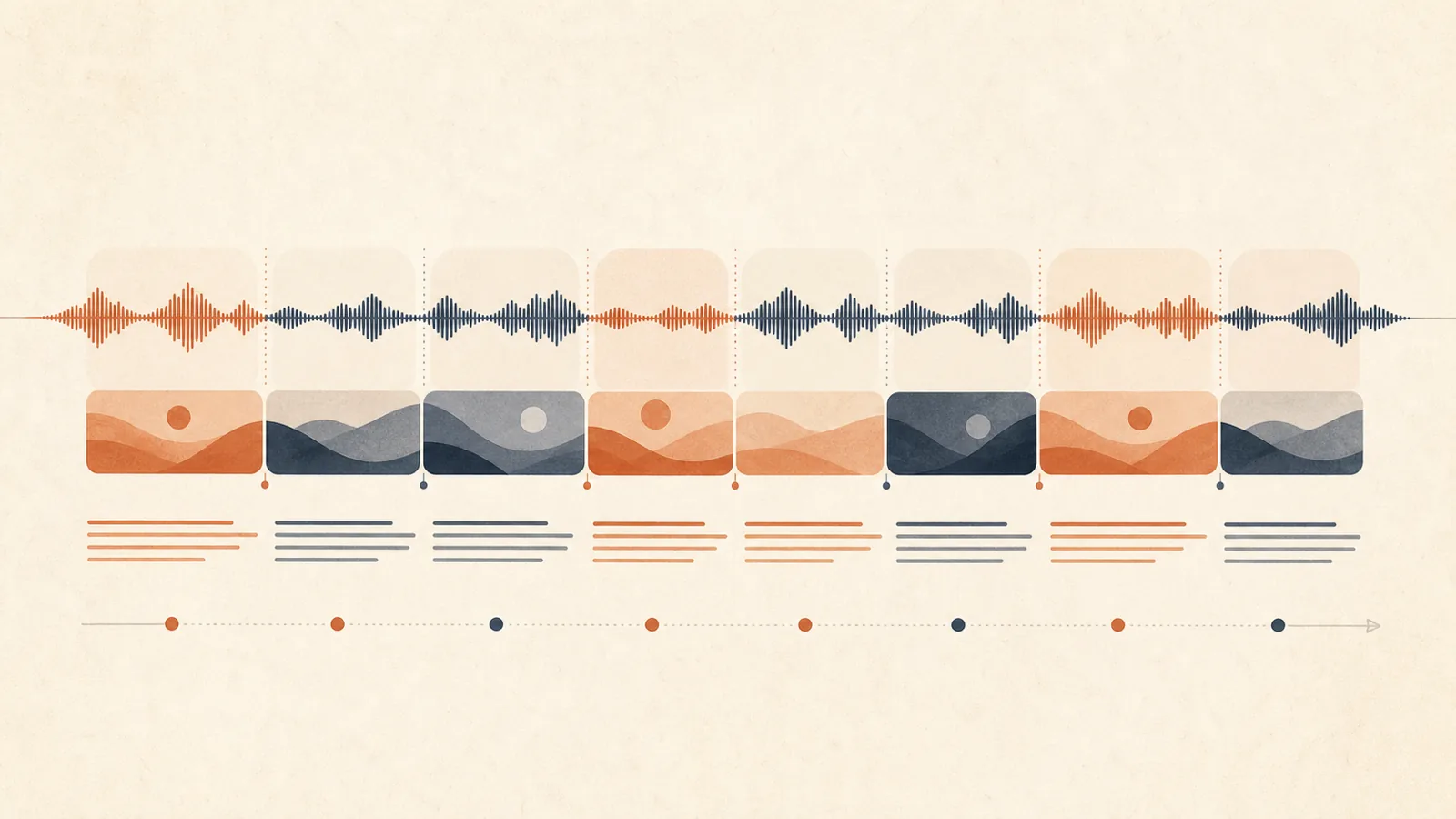
Interaction Models 中的核心架構設計:不再消耗完整的使用者回合再產生完整回應,而是將輸入與輸出視為連續串流,以約 200ms 的區塊(「micro-turns」)交錯處理與生成。模型不需要遵守人為的回合邊界——靜默、重疊與打斷都保留在模型的上下文中。
運作方式#
- 模型持續交錯運作:處理 200ms 輸入 → 生成 200ms 輸出 → 處理下一段 200ms 輸入 → ……橫跨音訊、視訊與文字。
- 人類感知維持同時的輸入與輸出串流;模型看到的是單一交錯 token 序列(
input 0, output 0, input 1, output 1, …),編碼了相同的時序資訊。 - 因為時序已嵌入序列中,模型對經過的時間有直接感知,能在使用者的回合進行中就採取行動,而非僅在結束後。
對比:基於回合的模型看到的是帶有硬性回合邊界的交替 token 序列;即時感受是由 harness 預測這些邊界(VAD 等)來模擬的——參見 Turn-Based Interface Bottleneck。
為何選擇 200ms#
200ms 區塊足夠小,能實現多種輸入/輸出模態的近即時並行。代價是:推論必須執行頻繁的小型 prefill 與 decode,每次都有嚴格的延遲限制——而現有的 LLM 推論函式庫並非為此設計(每回合有顯著的額外開銷)。
推論:串流式會話#
TML 對頻繁小型 prefill 問題的解法:
- 客戶端將每個 200ms 區塊作為獨立請求發送。
- 推論伺服器將區塊附加到 GPU 記憶體中的持久序列——避免重複的記憶體重新配置與元資料重新計算。
- 已將此方案的一個版本上游至 SGLang。
- 加上針對雙向服務形狀的延遲調校核心:例如用 gather+gemv 取代標準 grouped gemm 來實作 MoE 核心(引用了 PyTorch/
gpt-fast與 Cursor 的 warp-decode 的先前工作)。
訓練器-取樣器對齊#
位元級訓練器-取樣器對齊用於訓練穩定性以及系統元件的除錯。透過批次不變核心實作,端到端額外開銷低於 5%。兩個重點核心:
- All-reduce / reduce-scatter — NVLS 低延遲通訊核心,在 Blackwell 上具確定性,跨不同平行策略(Sequence Parallelism vs Tensor Parallelism)實現位元級對齊。
- Attention — Split-KV 通常會導致 decode 與 prefill 之間累加順序不一致;修正方式是在 decode 與 prefill 之間一致地分割(例如每次 4096 個 token,左對齊),同時維持兩者的效率。
帶來的效益#
今天每種需要專用 harness 的互動模式,都變成模型行為的特例——並隨著模型規模與訓練資料的增長而改善:主動插話、同時說話、視覺線索反應、時間估計。參見 Full-Duplex Interaction。
相關連結#
- Interaction Models — 上層概念
- Turn-Based Interface Bottleneck — 本概念所取代的方式
- Encoder-Free Early Fusion — 互補的「最小前處理」選擇,使串流可行
- Interaction / Background Model Split — micro-turns 讓互動模型保持在場;深度推理被委派出去以免阻塞串流
- Full-Duplex Interaction — 解鎖的能力
- The Bitter Lesson — 「無回合邊界 → 互動模式成為可擴展的模型行為」是其直接應用
- Context Window Smart Zone — 以 200ms 粒度的連續音訊/視訊快速累積上下文;開放的長會話問題
- Interactivity Benchmarks — 回合切換延遲(0.40s)是移除回合邊界的直接、可量測成果
- TML-Interaction-Small — 基於此機制建構的模型(200ms 交錯輸入/輸出區塊)
資料來源#
Cited by 11
- Encoder-Free Early Fusion×2
Avoids the latency and complexity of large standalone encoders/decoders — important when you have…
- Full-Duplex Interaction×2
All of these are special-purpose harnesses today; in an interaction model they're special cases of…
- Interaction / Background Model Split×2
a time-aware interaction model that maintains real-time presence — perceiving and responding in a…
- Interaction Models×2
Time Aligned Micro Turns, Interaction Background Model Split, Encoder Free Early Fusion — the three…
- The Bitter Lesson×2
Time Aligned Micro Turns — remove artificial turn boundaries so interaction modes become scalable…
- TML-Interaction-Small×2
Interaction mechanism: Time Aligned Micro Turns — 200ms interleaved input/output chunks, no turn…
- Turn-Based Interface Bottleneck×2
The Bitter Lesson says these hand-crafted systems get outpaced by general capability growth → the…
- Cursor
Earlier Cursor engineering also shows up obliquely: warp-decode kernels are cited as prior art for…
- Interactivity Benchmarks
Time Aligned Micro Turns — turn-taking latency (0.40s) is the direct payoff of removing turn…
- Live-Path Minimalism
Time Aligned Micro Turns — TML's disclosed counterpart on the inference internals: persistent…
- Interaction & Multimodal
Time Aligned Micro Turns — The core interaction-model move: input/output as continuous streams in…
Related articles
- Interaction Models
Thinking Machines Lab (May 2026): models that handle audio/video/text interaction natively in real time instead of via…
- Full-Duplex Interaction
Perceive-and-respond simultaneously across modalities; proactive interjection, visual-cue reactions, simultaneous speec…
- Interaction / Background Model Split
Dual-model architecture: time-aware interaction model stays present; async background model handles deep reasoning/tool…
- Encoder-Free Early Fusion
Multimodal design with minimal pre-processing instead of large standalone encoders: TML co-trains dMel audio + 40×40-pa…
- Thinking Machines Lab
AI research lab behind interaction models (May 2026) and the Inkling open-weights family (July 2026, 975B/41B from scra…