資料來源#
- AI Agent Authentication and Authorization
- OpenID Foundation advances authorization for the agent era with new AuthZEN Working Group Drafts
摘要#
AIMS 是 IETF Internet-Draft draft-klrc-aiagent-auth-03(Kasselman/Lombardo/Rosomakho/Campbell/Steele/Parecki — Defakto/AWS/Zscaler/Ping/OpenAI/Okta;2026 年 7 月)核心的概念模型。其主張是:AI agent 是一種 workload,它引發的 identity、authentication 與 authorization 問題並非新問題 — 應透過組合既有、廣泛部署的標準(WIMSE/SPIFFE workload identity、OAuth 2.0 family、OpenID Shared Signals)來解決,而不是發明 agent-specific protocols。AIMS 是「建立、維持與評估 agent workload 的 identity 與 permissions 所需的一組 functions」— 它是概念模型,不是 product、protocol 或 single architecture;可以存在於單一元件,也可以分散在 identity providers、provisioning services、authorization servers、policy engines 與 runtime enforcement points 之間。
證據注意事項(各處皆應附上): 這是standards-track proposal — 一份 individual submission、Informational,且尚無 IETF Working Group consensus(它引用 IETF、CNCF 與 OpenID Foundation 的規格,但本身尚未獲批准)。所有 MUST/SHOULD 都應視為作者的建議,而非已採用的標準。其 evidence: tier 是 practitioner-opinion。
它對這個 vault 為何重要: agent-security cluster 幾乎全部來自單一供應商的 ebook(Zero Trust for AI Agents)。AIMS 是 agent identity 領域首個 standards-track、multi-vendor primary source,並直接針對兩個長期未解問題 — sub-agent credentialing(Agent Identity and Authentication)與 agent-to-agent trust protocol layer(Agent-Native Infrastructure)。
Agents 是 workloads(框架轉換)#
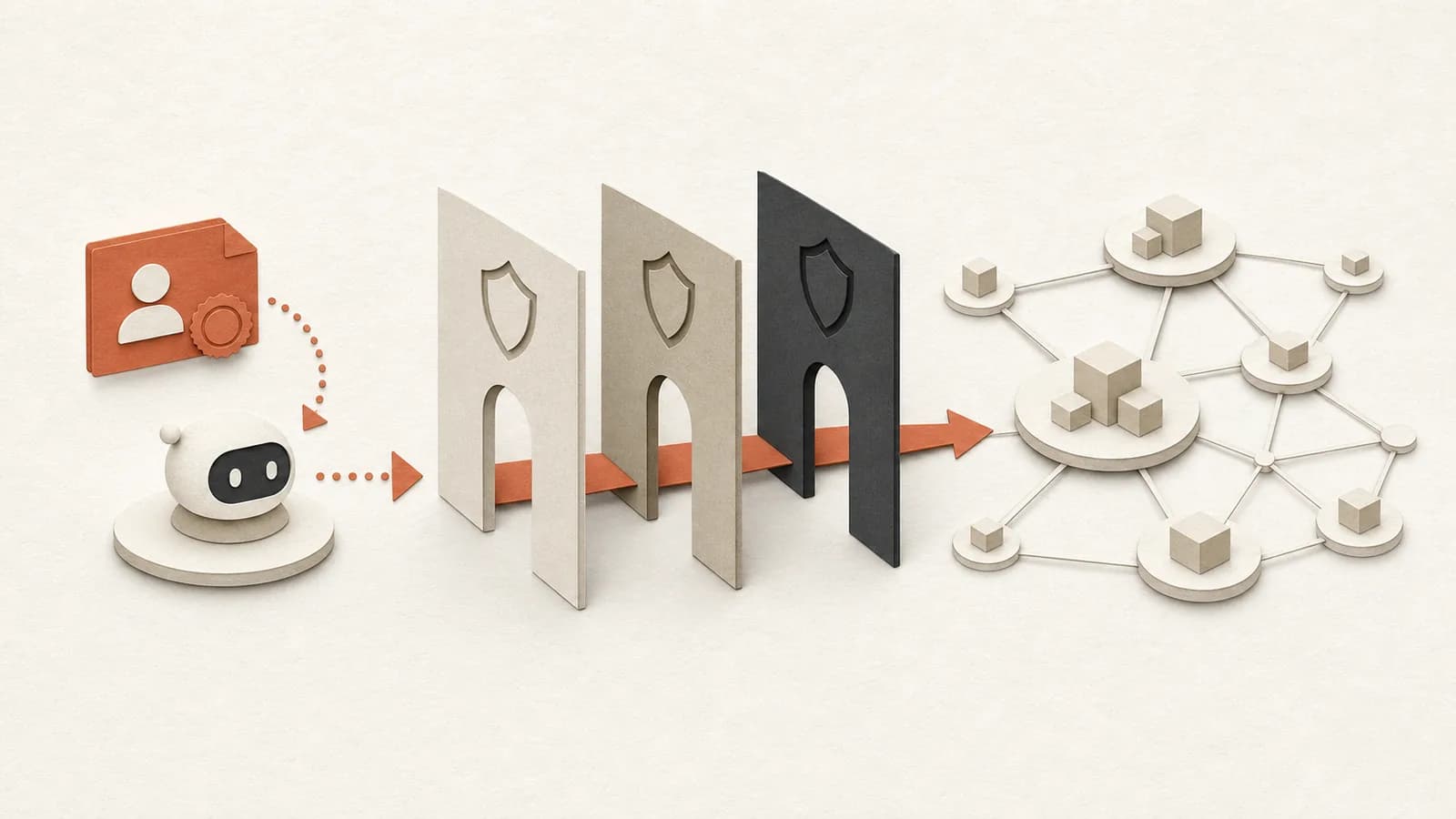
Agent 是一種 workload,會反覆與 LLM 及一組 Tools/Services/Resources 互動,直到達到終止條件(draft 的 Figure 1)。既然它是 workload,便需要 identifier 與 credentials,才能由它接觸的各方進行 authentication — 而如果它代表 user 或 system 行動,該 principal 必須將 authority delegate 給它,且 delegated context 必須保留到 authorization decisions 與 audit trails 中。這個重新框架化,讓整個問題能以 workload-identity 與 delegated-authorization standards 解決,而不需要新機制。
值得注意的是,「Tool endpoint 本身可能由另一個 AI agent 實作」 — 因此 agent-to-agent 只是 workload-to-workload case,同樣的 primitives 也能涵蓋它。
分層堆疊(Figure 2)#
AIMS 是一個邏輯堆疊:較高層依賴較低層的 guarantees,並有兩個橫跨各層的欄位:
Policy | [ Monitoring, Observability & Remediation ] | Compliance
 | [ Authorization ] |
 | [ Authentication ] |
 | [ Provisioning ] |
 | [ Credentials ] |
 | [ Identifier ] |
- Identifier → Credentials → Provisioning → Authentication → Authorization → Monitoring 是 dependency chain。
- Policy(§12)與 Compliance(§13)橫跨所有 layers,但被宣告為超出範圍 — 具有 deployment、regulatory 與 jurisdiction 特定性,並明確不是標準化目標。Policy MAY 是任何具版本、可審查的「policy-as-code」格式。
Identifier:WIMSE,以及 SPIFFE 作為已部署實例#
每個 agent MUST 具備恰好一個 WIMSE identifier([WIMSE-ID])— 這是一個在 trust domain 內唯一識別 workload 的 URI,並在 identity 的生命週期內保持穩定(authorization、delegation 與 audit 都以它為 key)。它 MAY 是 SPIFFE ID(spiffe://<trust-domain>/<path>),draft 稱之為「WIMSE identifier model 中廣泛部署且 operationally mature 的 instance」。這是對「什麼是 per-agent identity」的具體回答 — 它是 workload-identity URI,而不是臨時拼湊的 label。
Credentials、provisioning 與 posture assessment#
- Credentials 以密碼學方式將 identifier 綁定至 agent。WIMSE 定義 WIT(Workload Identity Token)與 WIC(X.509 Workload Identity Certificate);SPIFFE 定義 X.509-SVID、WIT-SVID 與 JWT-SVID。它們 SHOULD 是短期的,並具有明確 expiry。Static API keys 被列為 antipattern — 它們是 bearer artifacts,沒有密碼學綁定、生命週期長且難以輪替。
- Hardware-backed key storage(TPM、enclave、platform security module)是可選的 — 「不是 interoperability 所必需」。(這是與 ebook 最明顯的分歧 — 見下方比較。)
- Provisioning 是 runtime issuance/renewal/rotation,分為兩個階段(initial provisioning;到期前自動 rotation)。短期 credentials 被提供為明確 revocation 的替代方案:不需要 revoke,只要不再 renew。
- Posture assessment 發生於每次 provisioning/rotation event — draft(v-02 起)將舊有的「attestation」section 併入 provisioning,並改名為「posture management」。它評估 deployment-specific signals(hardware/TEE evidence、software-integrity measurements、supply-chain provenance、orchestration metadata、workload placement、operator assertions),以決定 credential 是否簽發、綁定哪個 identifier、哪種類型、具備哪些 attributes,以及存續多久。單一 signal 可能足夠;較高風險的 deployments 則需要多個 signals。不要求任何特定 attestation mechanism。
- Credential exchange 用於與 primary credential 不相容的 legacy/proprietary environments:OAuth 2.0 Token Exchange、Transaction Tokens 或 Workload Identity Federation 可從 primary credential mint 出 targeted secondary credential。
規則:LLMs 永不持有 credentials#
「Large Language Model MUST NOT 取得 agent credentials,或取得存取 tools 與 services 所需的 credentials。」原文列出的理由是:防止 LLM 使用、暴露 credentials,或因 prompt injection 而遭操控以揭露 credentials。這是 out-of-band reference-monitor doctrine 在 identity layer 的對應物 — secret 位於可被操控的 model 之外,而 wield credential 的是 agent(workload),不是 model。(在 -03 中以 [issue #127] 新增。)
Authentication:transport layer 與 application layer#
依照 WIMSE architecture,auth 可以發生於任一 layer,許多 deployments 會同時使用兩者:
- Transport-layer — mTLS,兩端都出示 X.509 credentials;搭配短期 SPIFFE/WIMSE identity,可提供強大的 channel binding。適合 service meshes(Istio、LinkerD)。限制: intermediaries(proxies、API gateways、service meshes、load balancers、protocol translators)會終止並重新建立 TLS,破壞 end-to-end transport identity — 而 serverless/multi-tenant-edge/cross-domain topologies 會使 transport identity 變得模糊。
- Application-layer — 透過在 transport 之上綁定 identity,能穿越 intermediaries。兩種 WIMSE mechanisms:
- WIMSE Proof Tokens (WPTs) — 經簽署的 JWT,證明持有 WIT 的 private key,並且綁定至特定 message context(例如 HTTP request),claims 為
aud/exp/jti/wth(WIT 的 hash)。這是 proof-of-possession,不是 bearer。其 core 與 protocol 無關(可綁定 Kafka、gRPC、non-HTTP)。 - HTTP Message Signatures([WIMSE-HTTPSIG] over RFC 9421)— 將 WIT 與 request components(method、request-target、content digest、WIT 本身)的 signature 結合,提供 proof-of-possession + message integrity end-to-end。
- 限制: 沒有內建 channel binding,因此 implementations 必須透過短生命週期、audience restriction、nonces 與 request binding,防禦 relay/replay。
Authorization:OAuth 2.0 作為 delegation spine#
- Agent Mission(§10.1) — agent 從 user、system 或另一個 agent 收到 Mission(自然語言任務);將 mission 轉換成具體 resource/authorization requirements 是planning step,超出範圍(draft 引用 Karl McGuinness 的「Mission Shaping Problem」)。這正是 wiki 的 agent-native「figure out the details」handshake 與具體 auth model 接合之處。
- OAuth as delegation — agent 作為 OAuth client 行動;access tokens 將 agent identity 放在
client_id,並將 delegated principal 放在sub。Flows 包括:user 進行 delegation 時使用 Authorization Code Grant(搭配 phishing-resistant user auth,例如 passkeys,且 agent 使用 Section-7 credentials 向 AS 進行 authentication,絕不使用 static client secrets);agent 代表自身行動時使用 Client Credentials / JWT Authorization Grant;agents 本身也能作為由 system 或另一個 agent 呼叫的 OAuth protected resources。 - Transaction Tokens(§10.5) — internal call chains 的 blast-radius control。microservices 之間傳遞 broad access token 存在 theft/replay/lateral-move risk(攻擊者若在 log 或 crash dump 中找到它,便能呼叫不同的 transaction)。相反地,應將它 exchange 為 transaction token:綁定至單一特定 transaction 的 downscoped token(其中加入 caller context、transaction context 與 unique ID),不能用於另一個 transaction,也不能搭配修改後的 details 重用。它是短期的。Transaction token MAY 再透過 OAuth Token Exchange exchange 為 access token,以呼叫下一個 service。
- Cross-domain chaining(§10.6) — 當 resources 位於不同 authorization servers 後方時,agent 使用 OAuth Identity and Authorization Chaining Across Domains(或 Identity Assertion JWT Grant / Transaction Token Grant profiles):將 current token exchange 為 JWT authorization grant,再出示它以取得 target domain 的 access token。這是 ephemeral spawned agents 的 delegation-chain mechanism。
- Human in the loop(§10.7) — 對高風險 actions,AS SHOULD 透過 CIBA 拒絕或提高驗證強度(在 user device 上進行 out-of-band approval)。關鍵是,local UI confirmation 不是 authorization — draft 與 MCP 的 user-solicitation pattern 一致,但堅持 agent MUST NOT 將 local approval 視為充分;它必須綁定至可驗證、由 AS 簽發的 grant。(已知缺口:CIBA 只建模 client-initiated flows,無法自然對應 mid-execution confirmation — 這正是 OpenID AuthZEN AARP draft 要透過將 CIBA generalize 為 policy-level prerequisite/approval pattern 而彌補的缺口;見下文。)
- Tool-to-service(§10.8) — tools 使用 Token Exchange / cross-domain chaining 存取 downstream resources。反模式: tool 將從 agent 收到的 access token 轉發出去(會招致 theft + lateral attacks)— 與 transaction tokens 相同的 containment logic。
- Discovery(§10.10) — 在 dynamic/ephemeral deployments 中,OAuth Authorization Server Metadata、Protected Resource Metadata 與 Client ID Metadata Documents 讓 agents 能在 runtime 綁定正確的 issuer/audience/flow,而不需 static config。
OpenID AuthZEN drafts(AARP + COAZ):標準化 authorization slice#
IETF draft-klrc-aiagent-auth stack 將 identity、credentials 與 delegated authority 標準化之處,OpenID Foundation's AuthZEN Working Group 正在標準化的則是authorization decision 本身 — 並於 2026-06-15(配合 Identiverse)批准兩份官方 Working Group Drafts:AARP 與 COAZ。兩者都是 proposed drafts,不是 ratified standards — practitioner-opinion;若與 vault 的 empirical per-call-authz systems(ScopeGate、aiAuthZ)觸及相同領域,權重低於已測量的工作。它們建立在 AuthZEN Authorization API 1.0 與其 Subject-Action-Resource-Context (SARC) decision interface 上 — 也就是兩個 research systems 各自以 ad hoc 方式實作的 interoperable「現在可以執行這個 action 嗎?」endpoint。
- AARP(Access Request and Approval Profile)。 它回答了 allow/deny authorization APIs 歷來無法回答的問題:policy 在能夠 authorize action 之前需要什麼? 當 policy 尚不能決定時 — 必須先滿足 approval、consent、delegated authority、attestation 或 risk assessment — AARP 定義 request、tracking、satisfying 與 re-evaluating 這些 prerequisites 的 interoperable patterns,讓 applications、authorization systems、governance platforms 與 agents 能夠協調,同時仍由 policy 作為 decision-maker,並在 enforcement 時進行評估。其 worked example 正是這個 vault 的 vendor-payment case:agent 嘗試進行超過門檻的 transfer 時,收到的不是空泛的 deny,而是**「尚未 — 以下是必要條件」**的 signal;它記錄 pending request 的 handle,稍後 hand off 或 resume,只有在 manager approve 且 policy 重新評估後才繼續。AARP 明確 generalizes CIBA:「這對 authorization prerequisites,就如同 CIBA 對 authentication approval」— 同樣是標準化、非同步、out-of-band 的互動,但generalized to policy,且可由 person 或 automated governance system 滿足,而不受限於 CIBA 的 client-initiated authentication-approval 形式。這是對 AIMS 自身承認的 mid-execution-HITL gap(上方 §10.7;下方 Open Questions)的直接 proposed answer。
- COAZ(AuthZEN Profile for MCP Tool Authorization)。 這是一個標準化 將 MCP tool invocations 對映至 AuthZEN SARC structure 的 profile,透過 metadata 讓不同 enforcement points — API 或 AI gateways、service meshes、downstream systems — 知道如何針對相容的 PDP authorize tool call。它讓 MCP tool 揭露呼叫它所需的 authorization checks,為 agentic workflows 帶來 per-invocation authorization control — 也就是 MCP Tool Poisoning 與 per-call-authz pages 所主張的 action-layer defense 的 standards-track form。Industry review 涵蓋 Axiomatics、Cerbos、Okta、SailPoint、Indykite、Keycard 與 C1。
清楚的分工: AIMS(IETF)說明 agent/workload 是誰,以及 authority 如何 delegation;AuthZEN Authorization API + COAZ 說明這個具體 call 是否允許;AARP 說明在作出該 decision 之前必須先成立什麼條件。它們共同將 agent-auth problem 放在兩個 standards bodies 之間 — 具體證據顯示 governance layer 是多元且持續推進的,而非停滯(見經修整的 Open Questions)。
Observability 與 remediation 作為 security control(§11)#
Monitoring 是「security control,而不只是 operational feature」。Participants MAY 訂閱 OpenID Shared Signals Framework (SSF),搭配 CAEP 或 RISC 接收 signals(session revoked、risk elevated、token replay suspected、subject disabled),並 MUST 迅速 remediation — discard cached tokens、以更嚴格 constraints 重新 acquire、reduce privileges、re-run policy — 且 MUST NOT 繼續使用因 revocation 而失效的 authorization。Deployments MUST 保留tamper-evident audit logs(authenticated agent ID、delegated subject、resource、action + decision、timestamp/correlation ID、posture/risk state、remediation events),並 SHOULD 跨 agents/tools/LLMs 進行 correlation,以偵測 replay、confused-deputy、privilege escalation 與 anomalous sequences。各處穩定且可驗證的 identifiers,才能讓「哪個 entity 使用哪個 authorization context 做了什麼,以及 access 為何改變」得以 end-to-end 還原。
比較:AIMS 與 Anthropic Zero-Trust ebook#
兩者都針對 agentic Zero Trust 中的 per-agent identity,並在核心上趨於一致:static API keys 不可接受、credentials 必須短期且有密碼學綁定、per-agent identity 是 keystone、least privilege / minimal scopes,以及 observability-as-security-control 搭配 tamper-evident audit。但兩者在 primitives 與 authority 上有所分歧:
| 維度 | Zero Trust for AI Agents(Anthropic ebook,vendor) | AIMS(IETF draft,multi-vendor standards) |
|---|---|---|
| Identity primitive | Cryptographic IDs → X.509 certs → hardware-backed HSM/TPM identity + remote attestation(tiered target state) | WIMSE/SPIFFE URI 作為唯一 identifier(X.509-SVID 或 JWT/WIT-SVID) |
| Hardware attestation | Internet-reachable production 的 Advanced-tier target | 可選;「不是 interoperability 所必需」 — 多種 posture signals 之一 |
| Attestation model | Remote hardware attestation | 每次 issuance/rotation 時進行 「posture assessment」;deployment-specific signals(將 attestation 納入 provisioning) |
| Authentication | Short-lived OAuth tokens → mTLS → hardware-bound credentials | 相同,加上 application-layer(WPT、HTTP Message Signatures),用於 transport identity 失效的情況 |
| Delegation / sub-agents | Sub-agents inherit 「最多與 parent 相同的 permissions」(大致留白) | OAuth Token Exchange + Transaction Tokens + cross-domain chaining — downscoped、transaction-bound,不是 raw inheritance |
| LLM & credentials | 未以規則說明 | 明確 MUST NOT — LLM 永不持有 credentials |
| Authority | Single vendor;Claude Code 作為 reference implementation | Six vendors,standards-track — 但為 individual submission,尚無 WG consensus |
這種 productive tension 在於:ebook 將hardware attestation 作為 aspirational endpoint;AIMS 則主張,可以透過短期、經 posture assessment、具 delegation 的 credentials取得 security property,而不必要求每個 ephemeral workload 都進行 hardware attestation — 並加入 ebook 缺少的 delegation-chain machinery(transaction tokens、identity chaining)。兩者都不是 ratified standard:ebook 是 vendor practitioner-opinion,AIMS 是 standards-draft practitioner-opinion。
相關連結#
- Agent Identity and Authentication — 主要 sibling;AIMS 是同一 keystone control 的第二個(standards-track、multi-vendor)來源,並提供 ebook 只停留在 tier-label 層級的具體 identifier/credential/delegation primitives
- Zero Trust for AI Agents — vault 另一個 agent-security framework(hub);AIMS 在 ebook 規定 tiered maturity model 的地方組合既有標準 — convergences 與 divergences 已列於上表
- Least Agency — AIMS 透過 OAuth minimal scopes、audience restriction 與 transaction-token downscoping(綁定一個 transaction 且不可重用的 token)落實 least agency — 「限制每個 tool 能做什麼」在 standards layer 的實例
- Blast Radius (Agentic) — transaction tokens、no-token-forwarding antipattern 與短期、non-revoked credentials,都是 internal microservice call chain 的 blast-radius containment(限制 token theft、replay 與 lateral movement)
- Agent-Native Infrastructure — AIMS 是該頁 open protocol-layer question 的候選答案:agent-to-agent negotiation 所需的 trust/identity/accountability primitives,取自 IETF/CNCF/OpenID standards(但 governance 尚未定案)
- Out-of-Band Prompt-Injection Defense — identity layer 上的相同 doctrine:將 secret 與 authorization decision 保留在可被操控的 LLM 之外(LLMs-never-hold-credentials;由 AS 而非 local UI 進行 authorization)— deterministic reference monitor 的 credential/authorization twin
- Off-Host, Identity-Bound Authorization — standards layer 與 concrete shipped system 的對照:AIMS 標準化 workload identity(WIMSE/SPIFFE)與 delegated authority(OAuth token-exchange、transaction tokens);aiAuthZ(Kodathala,arXiv 2607.05518)是運作中的 gateway,針對每則 message authentication human user(per-message HMAC + nonce),並可將 AIMS-issued identities 作為其 role + argument policy 的 service/principal inputs — 可在不同 granularity 組合(AIMS 將 identity 綁定至 workload/session/token;aiAuthZ 綁定至每則 user message),且 AIMS 僅為 design-only,aiAuthZ 則是 empirical。它是 single-author preprint,因此在 adoption questions 上權重低於這項 multi-vendor standards work
- Capability Gating Is Not Authorization — ScopeGate 是 AuthZEN/COAZ proposed-standard authorize-each-call 的
empiricalresearch counterpart:兩者都在具體(tool, args)call 上提供 deterministic allow/deny decision,但 ScopeGate 是 measured in-framework PDP/PEP,而 AuthZEN 的 Authorization API + COAZ 標準化 SARC decision interface 與 MCP→SARC mapping(WG draft,權重低於 measured system)。AARP 加入純 allow/deny gate(如 ScopeGate)缺少的「尚未 — 以下是 prerequisite」形式 - MCP Tool Poisoning — COAZ 標準化在MCP tool-invocation point放置 authorization decision,是該頁主張應位於(已被擊敗的)detection 下游的 action-layer defense 之 standards-track form
- Agentic Prompt Injection — LLM-never-holds-credentials rule 明確是 prompt-injection defense:被劫持的 model 無法揭露它從未持有的 secret
- MCP and Computer Use — AIMS 將其 human-in-the-loop model 與 MCP 的 user-solicitation pattern 對齊,並把 MCP tools 視為 OAuth authorize 的 resource surface;但堅持 local approval 不是 authorization
- Hermes Agent — shipped contrast:Hermes 以 ad-hoc DM-pairing + allowlist(human-auth)加上 container-as-boundary 保護 multi-user agent access;AIMS 則提出 standards-based workload identity + delegated authorization;這是實務與 proposed standard 之間的落差
- OpenAI — Nick Steele(OpenAI)是 co-author,與 Defakto、AWS、Zscaler、Ping Identity 及 Okta 並列
待解決的問題#
- No WG consensus。 這是一份描述其他仍在進行中的 drafts 的 individual submission(WIMSE identifier/creds/WPT/HTTP-sig、OAuth transaction-tokens、identity-chaining 全都是 Internet-Drafts)。其中哪些 primitives 最終會成為 RFC?這種 composition 能否通過 WG review?「誰治理 agent-auth protocol layer」(Agent-Native Infrastructure)目前是proposed(IETF/CNCF/OpenID),但尚未settled。OpenID AuthZEN drafts 讓問題更清楚: authorization slice 正由與 AIMS 的 IETF identity/delegation work 不同的 body 進行標準化 — OpenID Foundation's AuthZEN WG 已批准 AARP + COAZ 作為 Working Group Drafts(比 AIMS 的 individual-submission status 更進一步,但仍是 pre-ratification、community-review drafts)。因此 governance layer 具體上是多元的(IETF 負責 workload identity + delegated authority;OpenID 負責 authorization decision + prerequisites),且正在積極推進 — 不是單一 arbiter,而是跨 bodies 的分工,其最終 composition 本身仍未定案。
- Mission → authorization 超出範圍。 最困難的部分 — 安全地將自然語言 mission 轉換為具體 scopes/resources — 被明確延後為「planning step」。被操控的 planning step 可能請求過度寬廣的 authorization;AIMS 提供乾淨的 primitives,卻沒有說明如何保護該 translation 本身。
- Mid-execution human-in-the-loop。 Draft 承認 CIBA 只建模 client-initiated approval,且「doesn't map well」到 execution 中途所需的 confirmation — 這是已承認的 specification gap。OpenID AuthZEN AARP draft 已提出解法: AARP 將 CIBA 的 async out-of-band interaction generalize 為一般性的 prerequisite/approval pattern — 「尚未,以下是必要條件」— 不受限於 client-initiated flows,可在 mid-flow 由 person 或 automated governance system 滿足,並在 enforcement 時重新評估 policy。因此這個 gap 現在有了 proposed standards answer — 但它仍是 Working Group Draft,不是 ratified spec,且尚未整合至 AIMS 的 IETF stack。
- Posture assessment 的 deployment-specific 是刻意設計。 由於不要求特定 attestation mechanism,AIMS 讓trust assurance(不只是 protocol)的 interoperability 變得未明確:兩個符合 AIMS 的 deployments,可能以完全不同且不可比較的 signals 評估 posture。
- 沒有 empirical evaluation。 不同於 Out-of-Band Prompt-Injection Defense(至少執行過一次 adaptive reproduction),AIMS 是沒有 measured attack-resistance 的 design document — 其 security 仰賴 composed specs 自身(大多不是 agentic)的 threat models。
資料來源#
- AI Agent Authentication and Authorization — IETF Internet-Draft
draft-klrc-aiagent-auth-03,AI Agent Authentication and Authorization(Informational,individual submission),2026 年 7 月 6 日,practitioner-opinion。§4(agents are workloads,Figure 1)、§5(AIMS stack,Figure 2)、§6(WIMSE/SPIFFE identifier)、§7(credentials;static-key antipattern;hardware-backing optional)、§8(provisioning + posture assessment;LLMs-never-hold-credentials rule)、§9(transport mTLS vs application-layer WPT / HTTP Message Signatures)、§10(OAuth delegation、mission、transaction tokens、cross-domain chaining、CIBA human-in-the-loop、tool-to-service、discovery)、§11(SSF/CAEP/RISC monitoring + tamper-evident audit) - OpenID Foundation advances authorization for the agent era with new AuthZEN Working Group Drafts — OpenID Foundation,OpenID Foundation advances authorization for the agent era with new AuthZEN Working Group Drafts,2026 年 6 月 15 日,
practitioner-opinion(標準組織宣布新批准的 Working Group Drafts — 是 proposals,不是 ratified specs;全文以 proposed 描述,與其重疊處權重低於 vault 的empiricalper-call-authz papers)。提供:AARP(Access Request and Approval Profile — 將 CIBA generalize 至 client-initiated flows 之外的 prerequisite/approval pattern)、COAZ(AuthZEN Profile for MCP Tool Authorization — MCP invocations → Subject-Action-Resource-Context / Authorization API 1.0)、OIDC→OAuth→CIBA→Verifiable-Credentials→AARP progression,以及 industry-participation list(Axiomatics、Cerbos、Okta、SailPoint、Indykite、Keycard、C1)
Cited by 14
- Agent Identity and Authentication×5
The above is one vendor's tiered maturity model. AIMS (IETF draft-klrc-aiagent-auth-03, July 2026 —…
- MCP and Computer Use×4
Agent Identity Management System — AIMS treats MCP tools as the resource surface OAuth authorizes…
- Open Questions Backlog×4
Agent Identity Management System: No WG consensus. This is an individual submission profiling other…
- Off-Host, Identity-Bound Authorization×3
Agent Identity Management System — the standards layer vs a concrete system: AIMS (WIMSE/SPIFFE…
- Agent-Native Infrastructure×2
Agent Identity Management System — a concrete proposal for the "trust, identity, and accountability…
- Capability Gating Is Not Authorization×2
Agent Identity Management System — the standards-body home of the OpenID AuthZEN drafts: AuthZEN's…
- Does 'Impossible, Not Tedious' Kill Defense-in-Depth? Layered Friction, Agent-Relativity, and the Frequency Paradox×2
A cardinality bound tied to an authorization event is capability removal. The framework's own…
- MCP Tool Poisoning×2
Agent Identity Management System — the standards-body home of the OpenID AuthZEN COAZ draft, which…
- Agentic Prompt Injection
Agent Identity Management System — the identity-layer defense: AIMS forbids the LLM from holding…
- Blast Radius (Agentic)
Agent Identity Management System — AIMS's transaction tokens (downscoped, transaction-bound,…
- Least Agency
Agent Identity Management System — AIMS enforces least agency at the standards layer: OAuth minimal…
- Agent Security
Agent Identity Management System — IETF draft-klrc-aiagent-auth: agents as WIMSE/SPIFFE-identified…
- Out-of-Band Prompt-Injection Defense
Agent Identity Management System — the same "keep it outside the manipulable model" doctrine at the…
- Zero Trust for AI Agents
Agent Identity Management System — the IETF AIMS proposal is the standards-track, multi-vendor…
Related articles
- Least Agency
OWASP term extending least privilege to agents: constrain not just what an agent can access but what each tool can do,…
- Zero Trust for AI Agents
Anthropic's security framework for deploying autonomous agents: trust nothing / verify everything / assume breach, appl…
- Capability Gating Is Not Authorization
Agent frameworks ship capability gating (which tools are exposed, schema validity) but no fail-closed per-call authoriz…
- Agent Data Injection (ADI)
A new category of indirect prompt injection: malicious payloads disguised as *trusted data* (metadata like a comment's…
- Agentic Prompt Injection
Direct and indirect injection of malicious instructions into an agent; LLMs cannot reliably distinguish information fro…